
capitalism
Occupy the Media: Fault Lines: The Colour of Recession 12/05/11
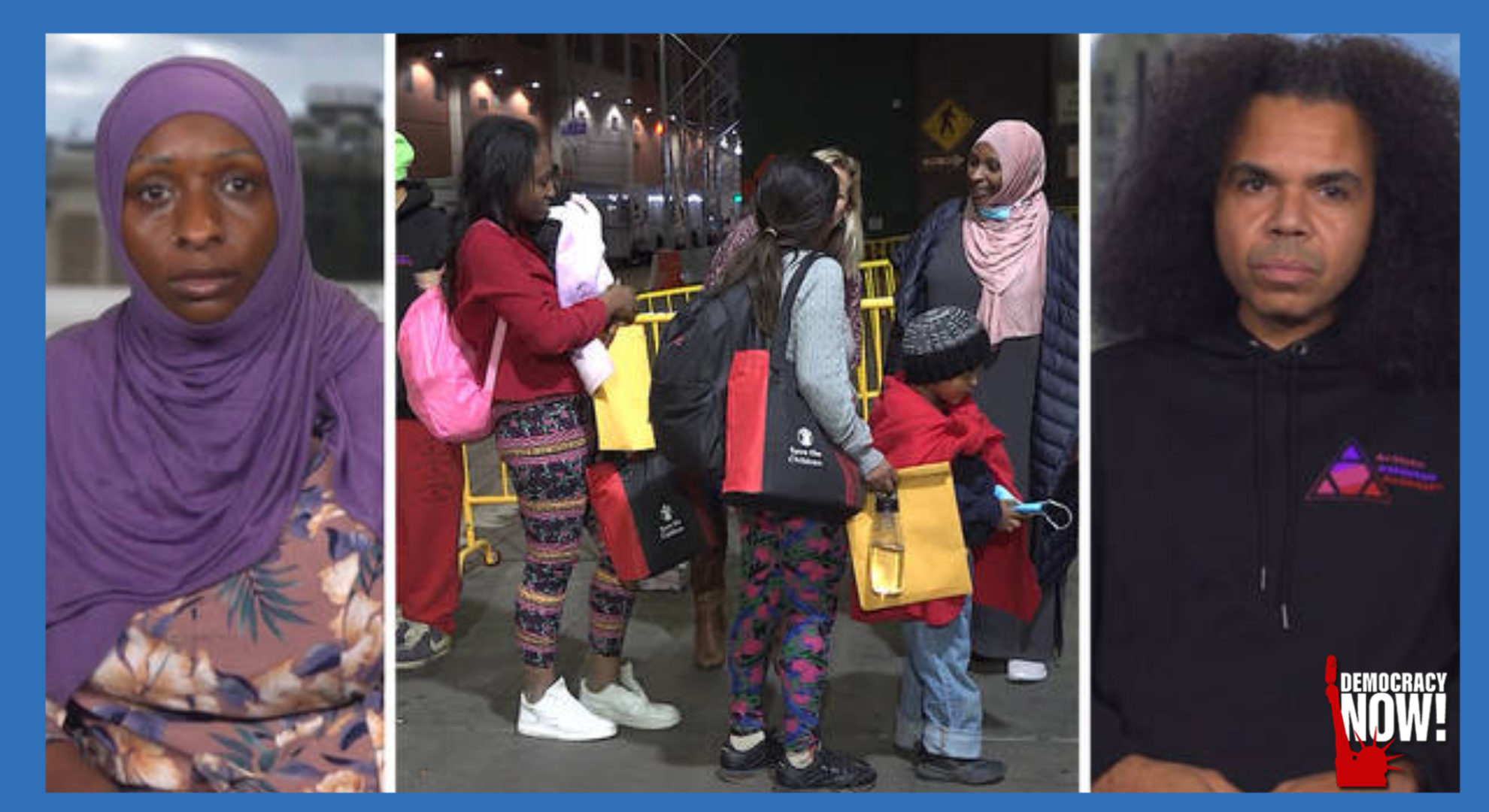
Independent journalist and hip-hop activist Rosa Clemente and Reverend Grayland Hagler rethink modern capitalism as a part of a panel discussing the implications of the economic crisis for minorities. Rosa says instead of bailing out the big banks, "we need to bail out the people," while Rev. Grayland says that major CEO's and people behind the mortgage scam should be jailed.
GRITtv: Nawal El Saadawi: What is Democracy?
"We live in one world, not three. I'm very much against that we have three worlds. We have one world dominated by the same system," says Nawal El Saadawi, the pioneering Egyptian feminist thinker. In part two of her conversation with Laura, Dr. Saadawi elaborates on what real democracy would look like, in Egypt and around the world, on the connections between capitalism, patriarchy, and religious fundamentalism--and not just Islamic religious fundamentalism. Distributed by Tubemogul.
GRITtv: March 11, 2011
"We live in one world, not three. I'm very much against that we have three worlds. We have one world dominated by the same system," says Nawal El Saadawi, the pioneering Egyptian feminist thinker. In part two of her conversation with Laura, Dr. Saadawi elaborates on what real democracy would look like, in Egypt and around the world, on the connections between capitalism, patriarchy, and religious fundamentalism--and not just Islamic religious fundamentalism. A little over a year ago, Rose Mapendo visited us in our New York studio to tell us her story. Rose escaped from the Democratic Republic of Congo with nine of her ten children, and she became a humanitarian activist. Pushing the Elephant picks up ten years later, as Mapendo reunites with her daughter and is struggling to heal her family and homeland as an advocate for refugees. The documentary exposes the hidden effects of war on families, and the collective power of women. Dr. Peter Gomes died recently; the Harvard theologian advocated for the rights of gays and lesbians after coming out about his own sexuality in 1991. Just after that, he gave the sermon at Rev. Jacqui Lewis's commencement. She shares her memories with us. Distributed by Tubemogul.
GRITtv: March 11, 2011
"We live in one world, not three. I'm very much against that we have three worlds. We have one world dominated by the same system," says Nawal El Saadawi, the pioneering Egyptian feminist thinker. In part two of her conversation with Laura, Dr. Saadawi elaborates on what real democracy would look like, in Egypt and around the world, on the connections between capitalism, patriarchy, and religious fundamentalism--and not just Islamic religious fundamentalism. A little over a year ago, Rose Mapendo visited us in our New York studio to tell us her story. Rose escaped from the Democratic Republic of Congo with nine of her ten children, and she became a humanitarian activist. Pushing the Elephant picks up ten years later, as Mapendo reunites with her daughter and is struggling to heal her family and homeland as an advocate for refugees. The documentary exposes the hidden effects of war on families, and the collective power of women. Dr. Peter Gomes died recently; the Harvard theologian advocated for the rights of gays and lesbians after coming out about his own sexuality in 1991. Just after that, he gave the sermon at Rev. Jacqui Lewis's commencement. She shares her memories with us. Distributed by Tubemogul.
GRITtv: Nawal El Saadawi: Keeping the Momentum in Egypt
"The working class and poor people are coming out, the middle and upper classes don't like that, they want to stop the revolution of the poor people. They accept the revolution of the middle class," says Nawal El Saadawi, pioneering Egyptian feminist thinker, author and professor. Meanwhile, she notes that the same old factors are moving to make sure that the revolution in Egypt doesn't rock the boat too much.Dr. Saadawi appeared on This Week with Christiane Amanpour this weekend, but she joins Laura in the GRITtv studio to tell us what she said that ABC wouldn't air.
GRItv: March 7, 2011
"The mystery of American Raymond A. Davis, currently imprisoned in the custody of local police in Lahore, Pakistan and charged with the Jan. 27 murder of two young men, whom he allegedly shot eight times with pinpoint accuracy through his car windshield, is growing increasingly murky." So wrote Dave Lindorff, who has been following the story of Davis's arrest and the subsequent controversy for CounterPunch. Is Davis a CIA agent? A security contractor? A diplomat? What's the deal with the numbers in his cell phone for some shady characters? Dave joins us via Skype to fill us in on the latest. "The working class and poor people are coming out, the middle and upper classes don't like that, they want to stop the revolution of the poor people. They accept the revolution of the middle class," says Nawal El Saadawi, pioneering Egyptian feminist thinker, author and professor. Meanwhile, she notes that the same old factors are moving to make sure that the revolution in Egypt doesn't rock the boat too much. Dr. Saadawi appeared on This Week with Christiane Amanpour this weekend, but she joins Laura in the GRITtv studio to tell us what she said that ABC wouldn't air. Last week Michael Moore appeared on our show and talked about the economy as he sees it--and Fox News called in billionaire Donald Trump to comment. Fair and balanced -- a billionaire to comment on a critique of this Country's skewed accumulation of wealth? Well, Michael Moore had the last word on Saturday in front of the Wisconsin state capitol. Distributed by Tubemogul.
GRITtv: Benjamin Barber: Who Takes Charge in Egypt?
"The one predictable thing about revolutions is that they are unpredictable," notes Benjamin Barber, fellow at Demos and author of Consumed and Jihad vs. McWorld. Barber points out that as revolution rocks the Arab world, each country will find its own solution and destiny. The important thing to note, he says, is that autocratic regimes hollow out their states' civil society, leaving little infrastructure in place for citizens to use to govern themselves. Benjamin joins Laura in studio to discuss the situation in Egypt and to update us on the conflict he wrote about in Jihad vs. McWorld years ago, between consumer capitalism and Islamism. Why can we picture no alternative to the two extremes, when revolution comes?
GRITtv: Feb. 2, 2011
"What we are seeing is nothing less than an Egyptian Tiananmen Square," says Khaled Fahmy of American University in Cairo. He watched today as bands of armed men descended on peaceful protesters in Cairo, heading for Tahrir Square. Some of the people, who Fahmy called "thugs" rode through crowds on horseback and camelback, trying to drive them back. Mubarak "has burned all his bridges with his people," Fahmy notes via phone from Cairo, and the violence today was a last gasp for the regime. "The one predictable thing about revolutions is that they are unpredictable," notes Benjamin Barber, fellow at Demos and author of Consumed and Jihad vs. McWorld. Barber points out that as revolution rocks the Arab world, each country will find its own solution and destiny. The important thing to note, he says, is that autocratic regimes hollow out their states' civil society, leaving little infrastructure in place for citizens to use to govern themselves. Benjamin joins Laura in studio to discuss the situation in Egypt and to update us on the conflict he wrote about in Jihad vs. McWorld years ago, between consumer capitalism and Islamism. Why can we picture no alternative to the two extremes, when revolution comes? "If Internet freedoms have to be secured with policy then as far as I'm concerned there are no Internet freedoms," says Douglas Rushkoff, author of Program or Be Programmed. He notes that what we've learned from the Internet shutoff in Egypt is that there is too much centralization on the Web, and when people like Joe Lieberman can call Amazon and knock WikiLeaks off their server or convince PayPal not to process their payments anymore, there's too much control. Doug joins us from his home via Skype to talk to us about the problems with the Internet we have, government control over it, and how we can create a 'Net they can't shut down. Distributed by Tubemogul.
GRITtv: Jan. 20, 2011
"It's dangerous to discount as mere theater what the Republicans do," notes Rebecca Dana of the Daily Beast. ; She points out that a lot will depend on who controls Congress in 2012--symbolic moves to repeal health care reform will be a lot less symbolic if the Senate is under Republican control as well.Rebecca joins guest host John Fugelsang to discuss the ongoing political debates over health care, over Sarah Palin, and over political language itself.In the first week of 2011, the now defunct Tunisian regime made a series of arrests in an effort to silence online activists critical of former president Ben Ali and his supporters.
GRITtv: John Fugelsang: GOP Should Love the Public Option
Republicans in Congress, we need to talk. Congrats on your inspiring vote to repeal the Affordable Care Act. I know you hate Obamacare – and on some levels, I agree with you. This bill is so watered down Dick Cheney could take it to Gitmo and pour it on Khalid Sheik Mohammed’s face. Distributed by Tubemogul.